Understanding Fire Extinguisher Types for Different Workplace Fire Risks
From offices and retail stores to warehouses and commercial kitchens, every workplace has potential fire risks – making fire safety an essential part of running any business. Having the correct type of fire extinguisher on site is one of the most important steps you can take to protect staff, customers, and your property.
However, not all fire extinguishers are designed to tackle the same type of fire. Using the wrong extinguisher can be ineffective or even dangerous, which is why it’s important to understand the different fire extinguisher types and where they should be used.
At Fireco, we help businesses across Auckland and Northland select the right fire extinguishers for their environment and ensure they are properly installed and maintained.
ABE Dry Powder Fire Extinguishers
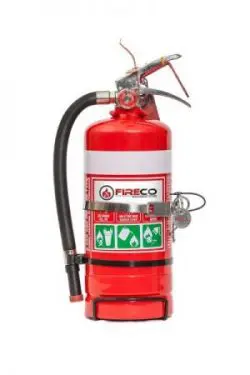
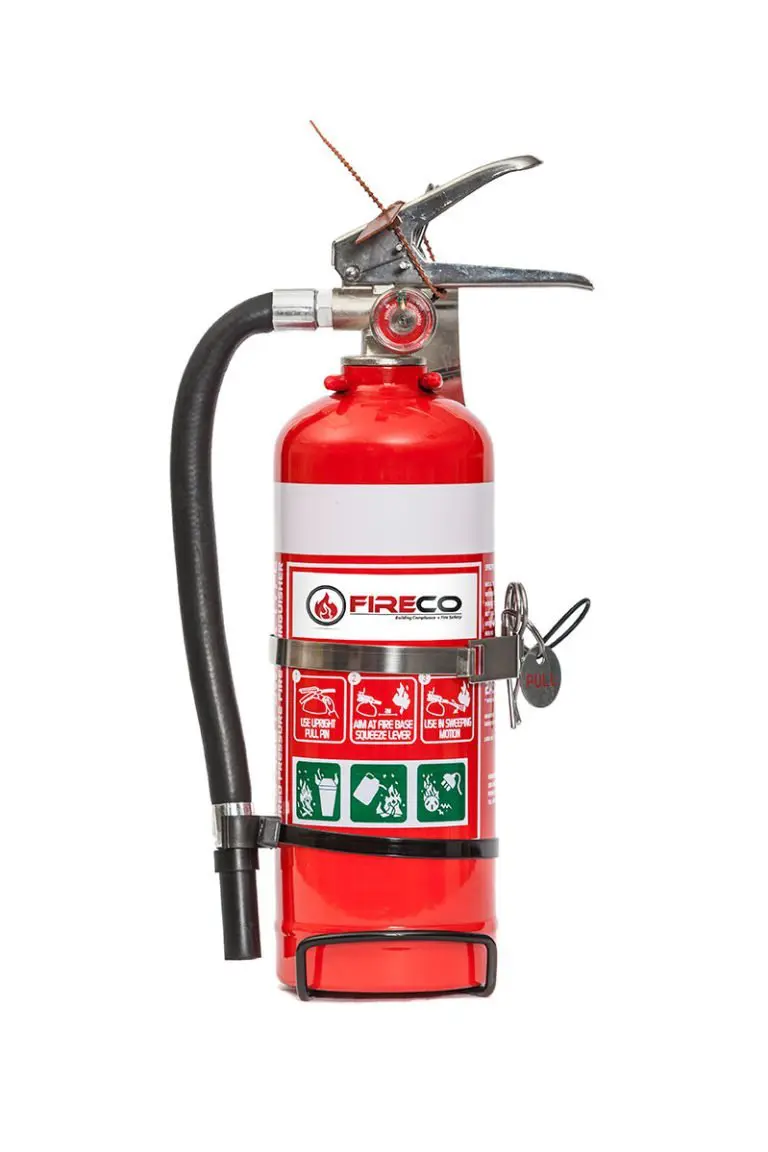
ABE dry powder extinguishers are among the most versatile and widely used extinguishers. Recognised by their white band, they discharge a fine powder that interrupts the chemical reaction of a fire and removes its fuel source.
ABE dry powder extinguishers are suitable for several fire classes:
- Class A: combustible materials such as wood, paper, and textiles
- Class B: flammable liquids
- Class C: combustible gases
- Class E: electrical equipment
Because they can tackle multiple fire types, ABE extinguishers are commonly used in a wide range of environments, including:
- Workshops and garages
- Vehicles, boats, and caravans
- Warehouses and light industrial settings
Carbon Dioxide (CO₂) Fire Extinguishers
Carbon dioxide extinguishers are designed primarily for fires involving electrical equipment and flammable liquids. Identified by a black band, they release carbon dioxide gas which displaces oxygen around the fire, effectively suffocating the flames.
Carbon dioxide extinguishers are suitable for:
- Class B: flammable liquids
- Class E: electrically energised equipment
Because they leave no residue, CO₂ extinguishers are ideal in environments where sensitive electronics are present, such as:
- Offices
- Server rooms and IT facilities
- Laboratories
- Control rooms
Wet Chemical Fire Extinguishers
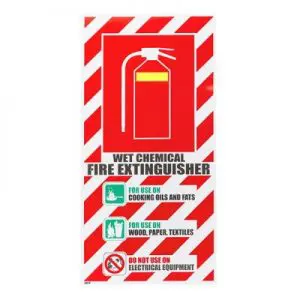
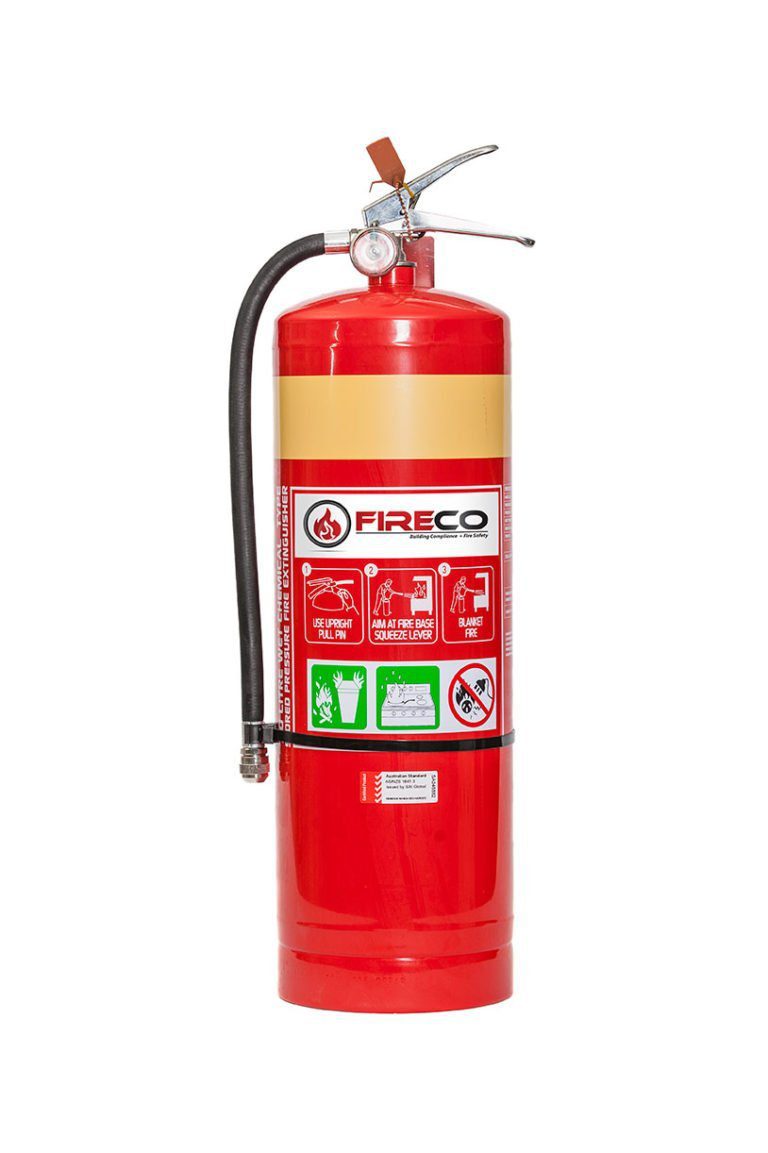
Wet chemical extinguishers are specifically designed for fires involving cooking oils and fats, which are common in commercial kitchens. They are identified by an oatmeal-coloured band.
The wet chemical extinguishing agent reacts with hot oil or fat to form a thick foam layer that seals the surface and prevents the fire from reigniting.
Wet chemical extinguishers are recommended for:
- Restaurants
- Cafés
- Commercial kitchens
- Catering facilities
Important: wet chemical extinguishers should not be used on electrical fires.
Foam Fire Extinguishers
Air foam extinguishers, marked with a blue band, are commonly used in workplaces where flammable liquids may be present. The foam forms a blanket over the burning material, cutting off oxygen and preventing vapours from fuelling the flames.
Foam extinguishers are effective against:
- Class A: wood, paper, and textiles
- Class B: flammable liquids
They are often used in:
- Warehouses
- Manufacturing facilities
- Workshops
- Storage areas containing fuels or solvents
Important: foam extinguishers are not suitable for electrical fires.
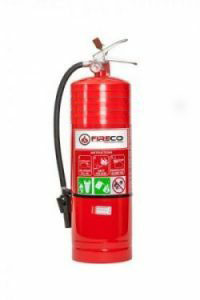
Water-Based Fire Extinguishers
Water extinguishers are one of the simplest and most common types of fire extinguishers. They work by cooling the burning material and removing heat from the fire.
These extinguishers are designed specifically for Class A fires, including:
- Paper
- Cardboard
- Wood
- Textiles
Water extinguishers are often used in environments such as:
- Offices
- Retail stores
- Schools and educational facilities
Important: water extinguishers should never be used on electrical fires or flammable liquid fires, as water can conduct electricity and spread burning liquids.
Fire Blankets
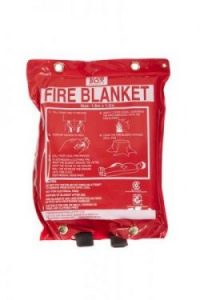
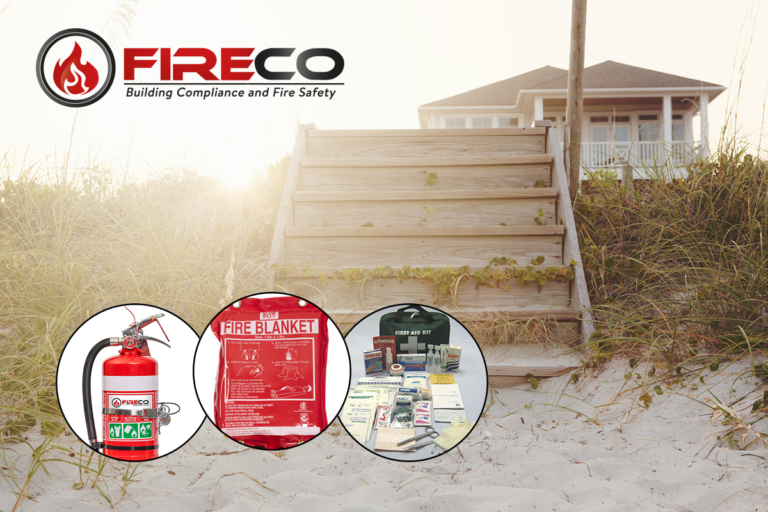
Fire blankets are another valuable fire safety tool, particularly for smaller fires or personal emergencies. Made from heat-resistant fibreglass material, they work by smothering flames and cutting off oxygen.
Fire blankets are compact and easy to store, making them ideal for areas where small fires could occur.
They are commonly found in:
- Laboratories
- Commercial kitchens
- Industrial workplaces
- Educational facilities
Fireco supplies fire blankets that meet AS/NZS 3504 certification standards.
Why Choosing the Correct Fire Extinguisher Matters
Different fires are classified according to the materials that are burning, such as paper, flammable liquids, electrical equipment, or cooking oils. Each type of extinguisher contains a specific agent designed to put out certain classes of fire safely.
Using an incorrect extinguisher can worsen the situation. For example, applying water or foam to an electrical fire can conduct electricity and create a serious electrocution risk. Likewise, some extinguishers may spread burning liquids rather than suppress them.
Understanding the correct extinguisher for your workplace hazards is a key part of responsible fire safety management.
Choosing the Right Fire Extinguishers for Your Workplace
The most suitable fire extinguisher for your business depends on the specific hazards present in your workplace. A restaurant kitchen will have very different fire risks compared to an office, warehouse, or manufacturing facility.
Assessing these risks properly ensures the right equipment is installed in the right locations, giving staff the best chance of controlling a fire in its early stages.
Professional advice is often the best way to ensure compliance with New Zealand fire safety standards and workplace safety requirements.
Fire Extinguisher Supply and Servicing in Auckland
At Fireco, we supply and service a full range of fire extinguishers for businesses across Auckland and Northland. Our team can help assess your workplace risks, recommend the correct fire extinguisher types, and ensure your equipment remains compliant through regular servicing.
If you’re unsure whether your business has the right fire protection equipment in place, get in touch with the Fireco team for expert advice and support.